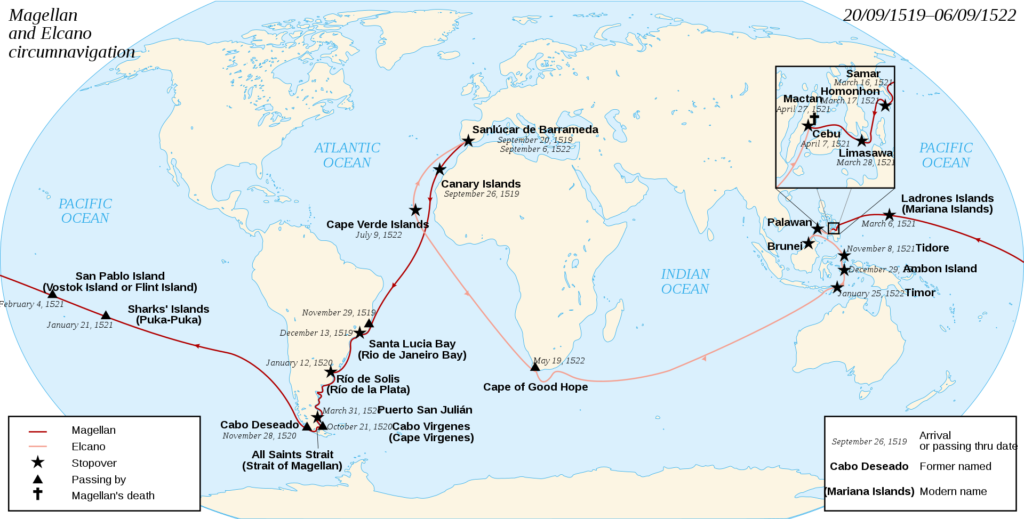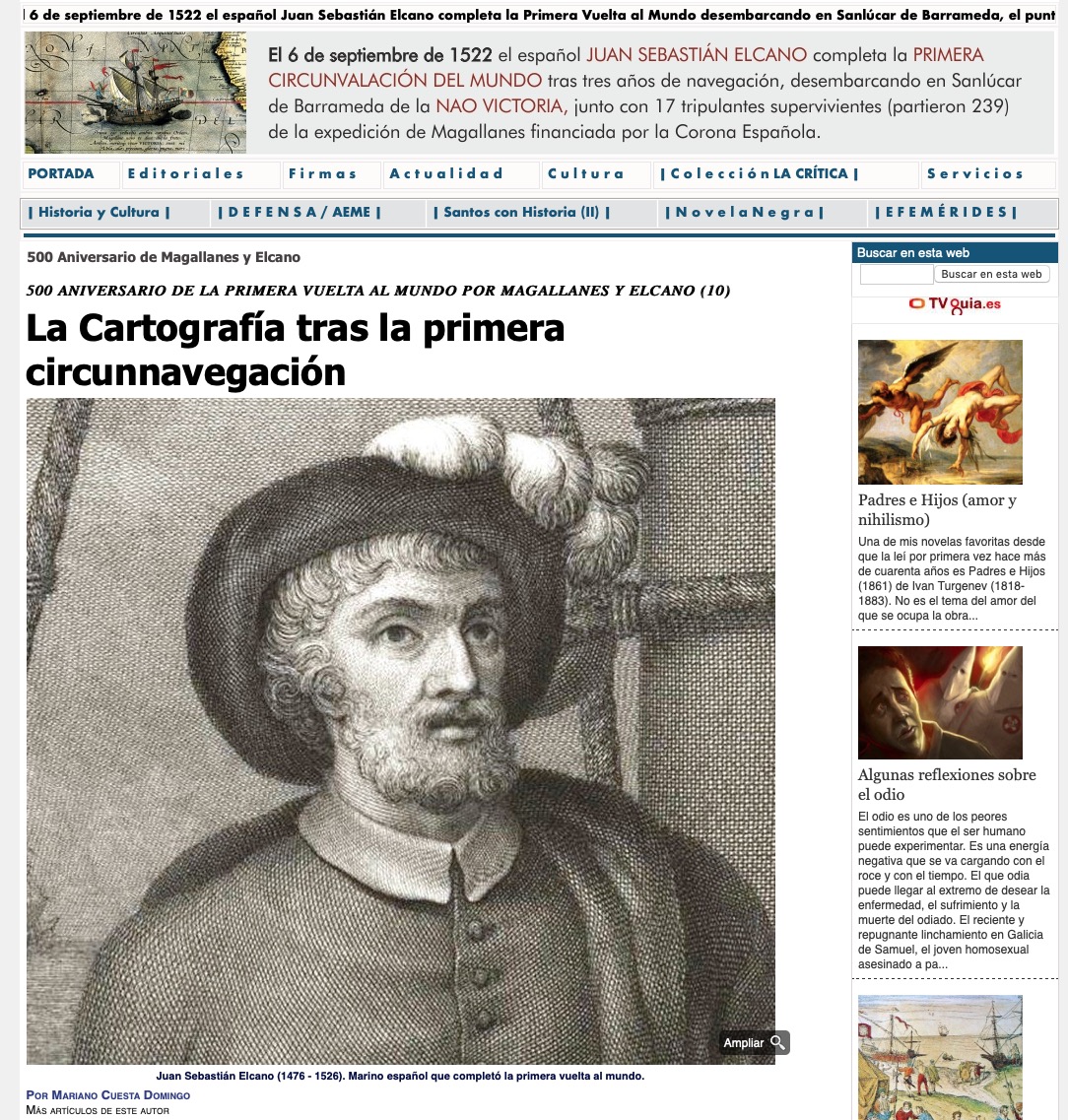
The expedition accomplished its primary goal — to find a western route to the Moluccas (Spice Islands). The fleet left Spain on 20 September 1519, sailed across the Atlantic and down the eastern coast of South America, eventually discovering the Strait of Magellan, allowing them to pass through to the Pacific Ocean (which Magellan named). The fleet completed the first Pacific crossing, stopping in the Philippines, and eventually reached the Moluccas after two years. A much-depleted crew led by Juan Sebastián Elcano finally returned to Spain on 6 September 1522, having sailed west, around the Cape of Good Hope, through waters controlled by the Portuguese.
The fleet initially consisted of about 270 men and five ships. The expedition faced numerous hardships including Portuguese sabotage attempts, mutinies, starvation, scurvy, storms, and hostile encounters with indigenous people. Only 30 men and one ship (the Victoria) completed the return trip to Spain.[n 1] Magellan himself died in battle in the Philippines, and was succeeded as captain-general by a series of officers, with Elcano eventually leading the Victoria‘s return trip.
The expedition was funded mostly by King Charles I of Spain, with the hope that it would discover a profitable western route to the Moluccas, as the eastern route was controlled by Portugal under the Treaty of Tordesillas. Though the expedition did find a route, it was much longer and more arduous than expected, and was therefore not commercially useful. Nevertheless, the expedition is regarded as one of the greatest achievement in seamanship, and had a significant impact on the European understanding of the world.[1][2]